
- President Trump has ordered an immediate suspension of the Diversity Visa Program (green card lottery).
- The decision follows recent tragic shootings at Brown University and the murder of a professor at MIT.
- The suspension reflects ongoing concerns about safety and security in the U.S.
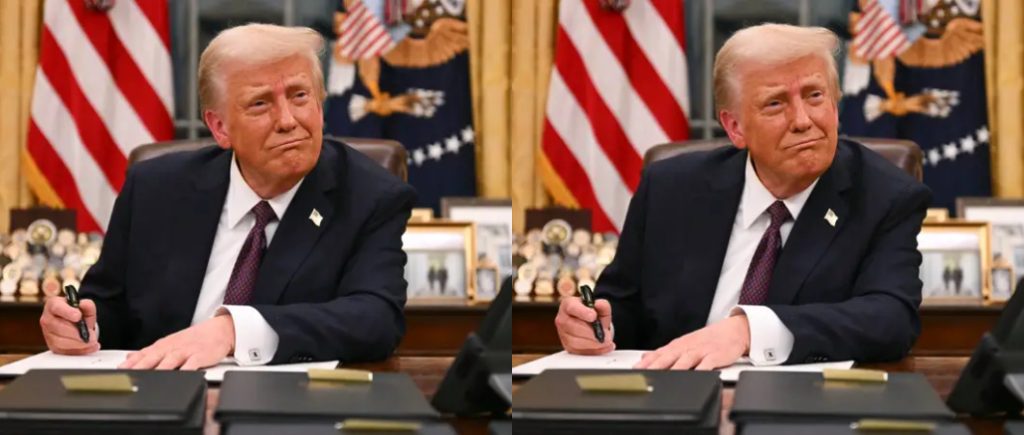
President Donald Trump has directed an immediate suspension of the United States’ Diversity Visa Program, commonly known as the green card lottery.
The decision comes in the wake of tragic shootings at Brown University and the fatal attack on a professor at the Massachusetts Institute of Technology (MIT).
Homeland Security Secretary Kristi Noem announced the suspension on Thursday, stating she was acting on the president’s direct orders. On her X social media account, Noem explained that the U.S. Citizenship and Immigration Services (USCIS) has been instructed to pause the program, which allows foreigners to gain permanent residency through a lottery system.
Noem’s Statement
“The Brown University shooter, Claudio Manuel Neves Valente, entered the U.S. in 2017 through the Diversity Visa Program (DV1) and was granted a green card. This individual should never have been allowed in the country,” she wrote.
“In 2017, President Trump sought to end this program following the NYC truck attack by an ISIS terrorist, who also entered through DV1 and killed eight people. Acting on the president’s instructions, I am immediately directing USCIS to halt the DV1 program to prevent further harm to Americans.”
The Suspect
Authorities have identified the suspect as 48-year-old Portuguese national Claudio Neves Valente. He is accused of carrying out a shooting at Brown University that left two students dead and nine others injured, and later killing an MIT professor.
Neves Valente was later found dead from a self-inflicted gunshot wound, ending a multi-state manhunt in the northeastern U.S.
Court records indicate that Neves Valente first entered the United States in 2000 on a student visa to attend Brown University, taking a leave of absence in 2001. He later obtained a diversity immigrant visa in 2017, becoming a lawful permanent resident. Authorities have not yet clarified his whereabouts or activities during the years between leaving school and receiving his green card.
Background on the Diversity Visa Program
Nigeria, the most populous country in Africa, has been ineligible for the Diversity Visa program for several years due to its classification as a “high-admission” country. Countries that have sent more than 50,000 immigrants to the U.S. in the past five years through family or employment-based visas cannot participate, a rule designed to maintain the program’s original goal of encouraging immigration from nations with low historical U.S. migration.
The Diversity Visa Program provides up to 50,000 visas annually via a lottery system. Selected applicants must complete extensive background checks, interviews, and security screenings before being granted permanent residency.
Broader Immigration Measures
The suspension forms part of a broader set of immigration policies enacted by the Trump administration, often in response to violent incidents linked to perceived gaps in immigration controls. Previous measures include restrictions on immigration from certain developing countries, a proposed $100,000 fee for H-1B visas, extended vetting for tourists, intensified deportation efforts in major cities, and plans to expand detention facilities with new “mega centres” nationwide.

Leave a Reply