
- Burkina Faso’s transitional parliament has unanimously passed a law banning homosexuality, with offenders facing two to five years in prison and fines.
- Justice Minister Edasso Rodrigue Bayala said repeat offenders who are foreigners will be deported, describing same-sex acts as “bizarre behaviour.”
- The law, which takes effect immediately, makes the country the latest in Africa to criminalise LGBTQ activity.

Burkina Faso’s transitional parliament has passed a law criminalising homosexuality, with offenders facing two to five years in prison and fines.
Justice Minister Edasso Rodrigue Bayala announced on state TV: “The law provides for a prison sentence ranging from two to five years and a fine. A person who engages in homosexual practices will appear before a judge and, in the event of a repeat offence, be deported if you are not a Burkinabe national.”
He added that the law takes immediate effect and condemned homosexual acts as “bizarre behaviour.”
The move makes Burkina Faso the latest African country to tighten anti-gay laws, joining nations like Senegal, Uganda, and Malawi, while others such as South Africa, Botswana, and Angola have decriminalised same-sex practices.
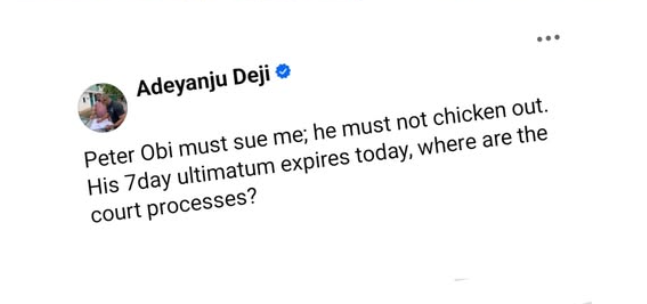
In other news…. Activist and political commentator, Deji Adeyanju, has challenged former Labour Party presidential candidate, Peter Obi, to proceed with legal action against him as promised.
In a post shared on social media, Adeyanju reminded Obi that the seven-day ultimatum he issued had expired. He insisted that Obi must not back down from his threat to sue, questioning why no court processes had been initiated yet.
“Peter Obi must sue me; he must not chicken out. His 7-day ultimatum expires today, where are the court processes?” Adeyanju wrote.
The public exchange stems from recent heated confrontations between the activist and Obi’s camp, with Adeyanju making strong allegations against the former governor. Obi’s supporters have been vocal in demanding accountability, while Adeyanju has maintained a defiant stance, daring him to test the matter in court.



Leave a Reply