
- President Trump introduced a new immigration initiative called the “Trump Gold Card.”
- The program allows wealthy foreigners to obtain U.S. permanent residency faster by contributing $1 million.
- This initiative contrasts sharply with the administration’s previously strict immigration policies.
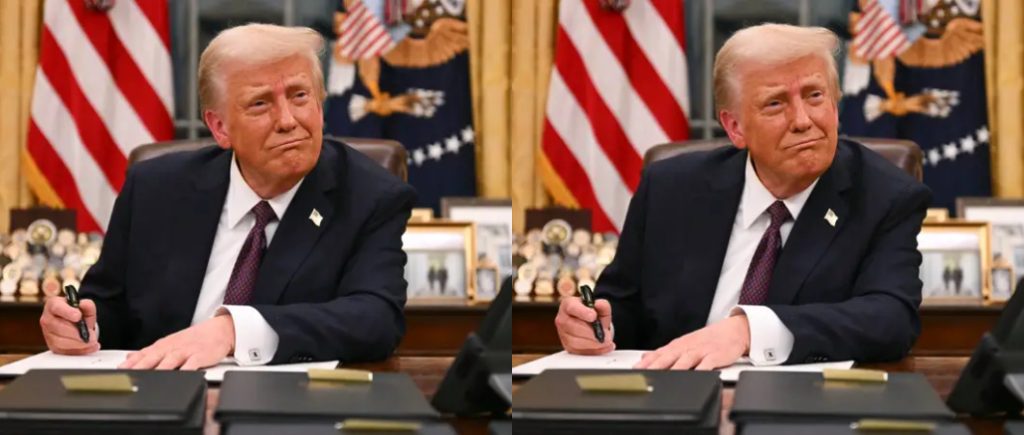
President Donald Trump has rolled out a controversial new immigration initiative that grants wealthy foreigners a faster route to U.S. permanent residency in exchange for a $1 million contribution. The program marks a striking contrast to his administration’s tough stance on immigration, offering an expedited, high-cost alternative for those with the financial means.
Trump officially announced the initiative called the “Trump Gold Card” during a White House roundtable on Wednesday, as the federal government simultaneously launched its application portal at trumpcard.gov.
The website, which went live Wednesday afternoon, provides the first public overview of the program, including eligibility rules, required documents, and processing fees.
Under the guidelines, applicants must pay a $15,000 Department of Homeland Security processing fee and pass a background check before being allowed to make the mandatory $1 million contribution. Employers may also sponsor foreign workers through the program by paying $2 million.
According to the administration, successful applicants will be granted lawful permanent residency through the EB-1 or EB-2 visa categories—avenues typically reserved for individuals with outstanding achievements or exceptional skills. Once all paperwork is filed, processing is expected to take only “weeks,” although applicants must still complete an in-person interview and may incur additional State Department charges.
Higher-tier option under consideration
Before the Gold Card even becomes fully active, officials are already previewing an upgraded version. The “Trump Platinum Card,” featured on the new site, would allow qualifying applicants to spend up to 270 days a year in the U.S. without paying U.S. taxes on income earned abroad. The Platinum tier requires a $15,000 DHS fee and a $5 million contribution. While no launch date has been set, interested individuals can join a waitlist.
Broader immigration context
The Gold Card’s debut comes as Trump enforces one of the strictest immigration crackdowns of his presidency. Recent security concerns, including the shooting of two National Guard members in Washington, D.C., have led the administration to restrict or block nearly all legal and illegal entry routes.
Trump first mentioned the concept in February, originally pitching it as a $5 million visa linked to citizenship. A September executive order finalized plans for the program, ultimately lowering the price to $1 million.
How it ties to existing programs
Commerce Secretary Howard Lutnick explained that the initiative would overhaul the long-running EB-5 investor visa program, which already offers green card eligibility to foreign nationals who fund U.S. job-creating ventures. Lutnick believes the revamped system could raise up to $1 trillion for the federal government while drawing what he calls “top-tier talent.”
Immigration analysts, however, note that major changes to EB-5 typically require approval from Congress, raising questions about how the new system will be put into effect.
Despite this, Trump has hinted that millions of Gold Cards could eventually be distributed, suggesting a fundamental shift in America’s immigration strategy—one where financial capacity significantly accelerates access as other pathways grow more restricted.
Earlier this year, Nairametrics reported Trump’s initial proposal for a $5 million “gold card” visa offering green card benefits and potential citizenship. The U.S. Sun also noted that Trump frames the program as a way to encourage high-net-worth individuals to invest in the U.S., claiming it will boost tax revenue and create jobs.

Leave a Reply