
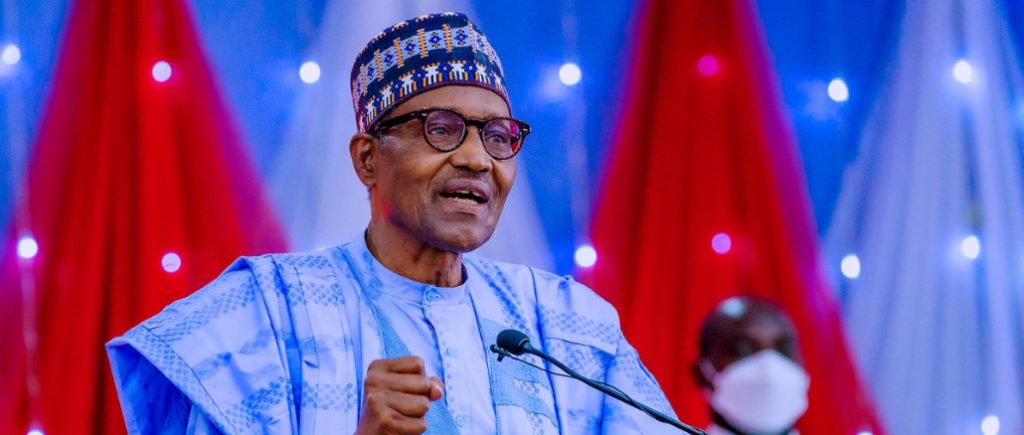
Muhammadu Buhari, a former Nigerian Army general and ex-president, was one of the most influential and controversial figures in Nigeria’s political and military history. Born on December 17, 1942, in Daura, Katsina State, Buhari was raised by his mother after his father passed away when he was just four years old.
Early Life and Education
Buhari was born into a devout Muslim family and was named after the renowned Islamic scholar Muhammad al-Bukhari. He was the 23rd child of Mallam Hardo Adamu, a Fulani leader, and Zulaihat. After his father’s death, his upbringing was overseen by Waziri Alhassan, son of Emir Musa dan Nuhu.
He began his education at Qur’anic school and completed elementary education in Daura and Mai’Adua. He later attended Katsina Middle School and Katsina Provincial Secondary School, where he graduated in 1961. During his school years, he served as head boy and house captain.
Initially considering a career in medicine, Buhari eventually followed a military path, enrolling in the Nigerian Military Training College and receiving advanced training in the UK, India, and the U.S.
Military Career and Rise to Power
Buhari participated in the Nigerian Civil War as part of the 1st Division under Lt. Col. Mohammed Shuwa. He held key military positions in the 1970s, including Director of Transport and Supply and later Governor of the North-Eastern State after the 1975 coup.
In 1976, following the assassination of General Murtala Mohammed, Buhari was appointed Federal Commissioner of Petroleum and Natural Resources and later became chairman of the Nigerian National Petroleum Corporation. He oversaw large-scale investments in the petroleum sector.
1983 Coup and Military Rule
Nigeria faced widespread economic decline and corruption during President Shehu Shagari’s administration. In December 1983, Buhari and other military leaders staged a coup, and he emerged as Head of State.
Buhari’s regime declared a “War Against Indiscipline” and took a tough stance on corruption, arresting over 500 politicians and business figures. However, his government was heavily criticized for its authoritarian rule journalists were jailed, civil rights suppressed, and the media censored.
This heavy-handed approach eventually led to his ousting in August 1985 by General Ibrahim Babangida. Buhari was detained until 1988.
Return to Civilian Life and Politics
After his release, Buhari kept a low profile but chaired several development-focused organizations like the Petroleum Trust Fund and the Katsina Foundation. His political re-emergence began in 2003 when he ran for president under the All Nigeria People’s Party (ANPP) but lost to Olusegun Obasanjo. He contested again in 2007 and 2011 but was unsuccessful.
In 2014, Buhari joined the All Progressives Congress (APC), a new political coalition. He contested and won the 2015 election, defeating President Goodluck Jonathan a historic peaceful transition in Nigeria’s democratic journey.
Presidency (2015–2023)
As president, Buhari prioritized anti-corruption efforts, security, and economic reforms. His administration faced several challenges, including a recession in 2016 and continued insecurity from groups like Boko Haram.
Despite mixed reviews of his first term, he won re-election in 2019. His presidency ended in 2023 after completing two terms.
Personal Life
Buhari married Safinatu Yusuf in 1971, and they had five children before divorcing in 1988. He later married Aisha Buhari in 1989, with whom he had five more children. His son, Yusuf Buhari, married Zahra Nasir Bayero, daughter of the Emir of Bichi, in 2021.
Death
On July 13, 2025, Muhammadu Buhari passed away in London, where he was receiving medical treatment. He was 82. His body was returned to Nigeria and buried in Daura, Katsina State, on July 15, 2025.
Net Worth
At the time of his death, Buhari’s net worth was estimated at $80 million. His wealth was accrued from decades of military service, political leadership, and roles in various government institutions.
![Odogwu dey Dj Khaled crib dey chop lobsters- Reactions as Burna Boy's father receives MFR award on his behalf from Buhari [Video]](https://www.gistlover.com/wp-content/uploads/2022/10/burna-award.jpg)
Leave a Reply