
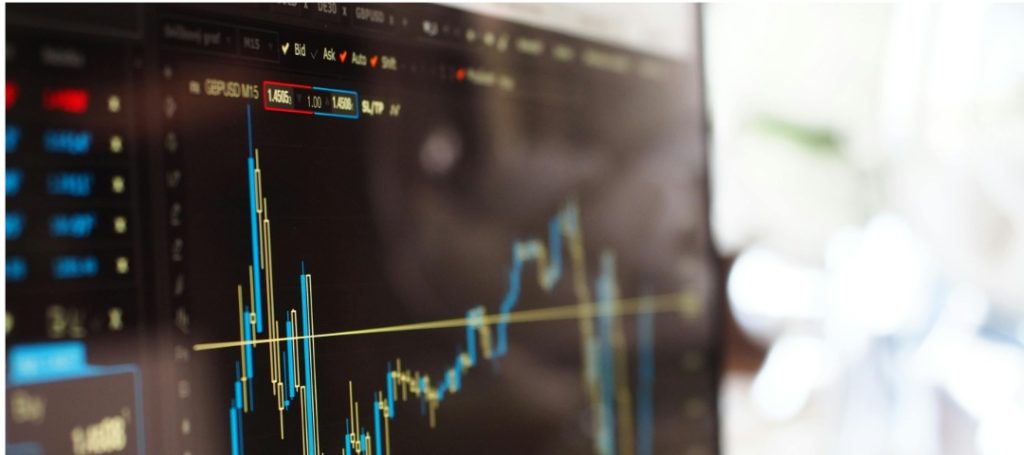
Forex markets happen swiftly and your choice of tools can either make or break your trades. Learning how to select the appropriate indicators will help you trade with confidence in volatile markets.
Forex traders’ first reaction in the foreign exchange world tends typically to be to look at the movement of the price. Charts indicate a currency pair’s movement in time and with enough exposure, trend lines begin to develop. However, pure price action can be tricky in some cases, particularly when the markets become choppily fluctuating or in the wake of sudden news. Traders require something beyond visual prompts—tools designed to decipher the direction, movement and reversal points from sheer price data.
Indicators provide that deeper understanding, allowing traders to sift out noise and act with greater confidence. These indicators, whether measuring momentum or pointing out support and resistance, provide additional levels of confirmation to help minimise emotional trading and enhance timing. With hundreds of indicators on most platforms, though, selecting the one best suited can be daunting without a plan.
Identifying the Ideal Indicator for Your Objectives
The type of indicator one chooses will ultimately be determined by one’s objectives. The trend-following indicators may be what one needs to provide visibility to validate direction before entering a trade for those who prefer to follow established trends. The oscillators or momentum indicators may be what others who like to catch reversals early on will gravitate toward. One must keep in mind that what works as the best indicator in one’s system may be useless or even worse in another situation and particularly when the markets change very quickly.
This differentiation is most important when venturing into niche markets. To illustrate, gold trading for beginners in these markets will find that typical forex indicators perform differently with commodities, as the prices in these markets react to a broader array of global variables, such as interest rate levels, inflation readings and geopolitical tensions. New traders in this niche will need to adjust by experimenting with how the selected indicators react to the unique volatility introduced by gold in the marketplace.
Simplicity Over Complexity
A common mistake made by new traders is assuming that increased indicators translate to better decisions. The truth is that too many indicators piled into one chart typically cause confusion and lack of clarity. Charts with a multitude of moving averages, oscillators, bands and trend lines can create conflicting signals and hinder timely decisions, particularly in high-speed situations.
Most successful traders prefer to work with one or two high-quality indicators that complement their trading system. One indicator to identify a trend might be used in combination with another one to indicate where and when to enter and exit while minimising redundancy and conflict between the two. The simpler and clearer a system is, the more confidence a trader will have in it and the system will work for them.
Consider Your Trading Style and Timeframe
Different trading styles require different indicators. A short-term position holder will find little use in long-term trend confirmation tools. Conversely, an investor with a long-term perspective will have little use for the noise created by short-term volatility, as highlighted by high-frequency indicators. Timeframes determine how indicators work and how effective their signals will be in particular sets of circumstances. A 1-minute chart viewer requires scalper-type indicators that react strongly to even the smallest movements and changes.
In contrast, a daily chart viewer looks for trend direction and strength, as well as steady signals less affected by short-term volatility. Recognising your trading rhythm is essential in selecting indicators suited to your timing and objectives. The incorrect fit can lead to mismatched signals and losing trades.
Always Backtest Before Committing
No indicator, whether reputational, well-liked or widely used, should be tested in a live trading context. Backtesting under various conditions will reveal the reliability and consistency of an indicator. It will demonstrate how frequently false signals are generated and whether the tool delivers where it counts—on actual trades under live conditions. Platforms that offer demo accounts or backtesting of historical charts provide traders with the ability to rehearse various strategies.
This process enables adjustment to settings and combining with other instruments before incurring any real risk. It’s a process of learning and accommodation, establishing confidence in the system and enhancing the probability of long-term profitability. Patience throughout this process will ultimately result in wiser trades and a healthier discipline in forex.
Final Line of Thinking
Every second counts and the only certainty in a marketplace like this one is uncertainty. The right trading indicator is a matter of both technical and personal choice. It’s less a case of searching for a one-size-fits-all solution and more a process of finding a tool that suits your style, timescale and risk appetite. There’s always a new shiny thing waiting in the wings, but the most useful ones are quite often the simpler, tried-and-tested ones. Whether trading complex currency pairs or charting the turbulent markets of commodities like gold, indicators must be used as supporting aids—never the sole driver. Strategy, coupled with disciplined testing, will always prevail over a chart cluttered with too many signs and too few signals.